


The rapid development of computationally intensive fields—from nuclear energy to space technologies—revealed a fundamental bottleneck by the second half of the 20th century: classical electronic computing systems cannot always provide the necessary processing speeds. As tasks grow in complexity, from modeling physical processes to analyzing big data, this limitation becomes increasingly critical. Under these conditions, optics has emerged as an alternative computing environment. By processing information through the physical properties of light rather than electronic components, optical systems unlock a fundamentally new level of parallelism and speed.
From Analog Roots to the AI Revolution
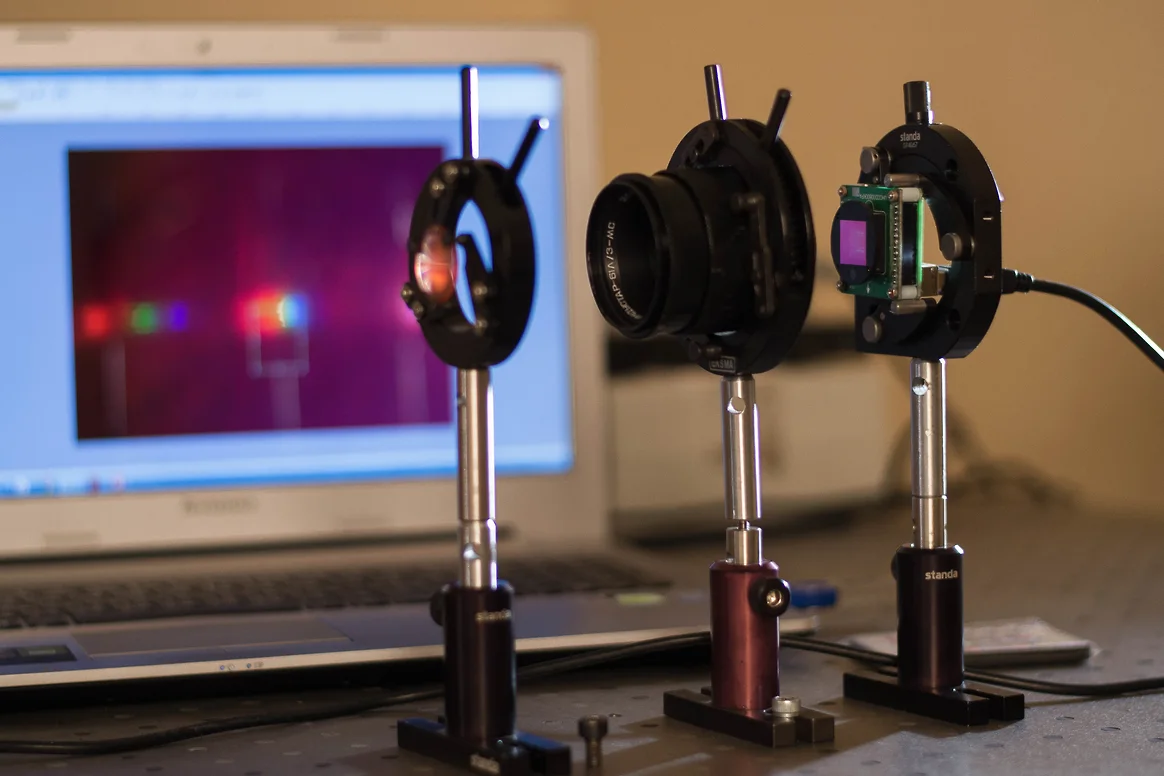
The foundations of optical information processing date back to A. Vander Lugt’s seminal 1964 publication. The 4F-system he proposed, featuring a diffractive structure in the frequency plane, became a standard tool for optical computing. As early as the 1970s and 1980s, this architecture was explored for creating analog computing machines capable of high parallelism and significantly faster signal processing, particularly in image processing, correlation analysis, and data filtering.
Today’s stage of development is defined by the emergence of optical and hybrid opto-digital neural networks. Cutting-edge research focuses on diffractive-optical structures and hybrid architectures that combine the best of optical and digital computing. In key metrics—primarily energy efficiency—these systems outperform traditional architectures by orders of magnitude. They are now viewed as the potential foundation for future AI systems, especially given the skyrocketing energy consumption of modern data centers and computing clusters.
While the idea of implementing neural networks via optics is not new—basic principles, including the challenge of non-linear transformations, were developed in the 1990s—those approaches remained largely theoretical. However, advancements in the manufacturing of micro- and nano-optical elements, coupled with the urgent demand for energy-efficient computing, have brought optical AI back to the forefront of the scientific agenda.
Samara University’s Breakthrough in Photonic Computing
In a joint project with RFNC-VNIIEF (Russian Federal Nuclear Center – All-Russian Scientific Research Institute of Experimental Physics), Samara University has successfully developed an analog photonic computing setup based on a hybrid 4F architecture.
The practical results are highly impressive:
- In handwritten character recognition tasks, the system achieved an accuracy of 98.7%.
- In image sequence analysis, the overall accuracy exceeded 96%.
- The system's energy efficiency proved to be 3.5 times higher than that of the NVIDIA Tesla H100, demonstrating not just theoretical, but immense practical potential for photonics in applied data processing scenarios.
Did you know?
- NVIDIA Tesla H100: A high-performance GPU that currently serves as one of the global standards for training heavy artificial intelligence models.
- 4F Architecture: A standard optical scheme consisting of two lenses, with a total optical path length equal to four focal lengths (hence the name).
Overcoming the Accuracy Barrier in Optical Transformers
A distinct and highly promising direction is the development of optical transformers—the architectures that power modern AI models. Their key advantages are high speed and low power consumption; however, they have traditionally lagged behind digital solutions in accuracy, which limited their use in real-world, scalable systems.
The approach pioneered at Samara University overcomes this limitation. A numerical model of optical matrix multiplication is embedded directly into the neural network's training process. This allows the system to adapt to the physical physics of computation and compensate for inherent errors. The multiplication parameters become trainable and adjust to the specific task, effectively turning a rigid mathematical operation into an adaptive architectural element and vastly expanding optimization capabilities.
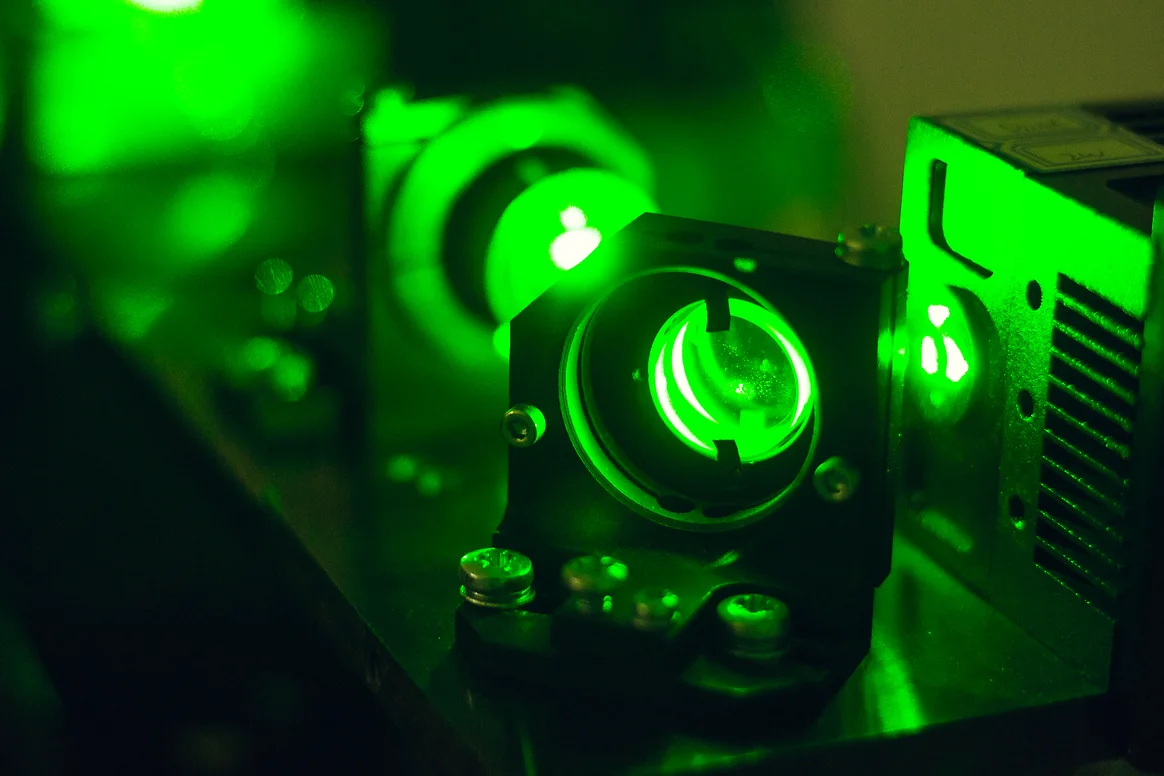
Experiments have confirmed the effectiveness of this approach across various tasks, including text processing (Tiny LLM), image processing (Tiny ViT), and credit scoring. Notably, the perplexity metric was reduced by approximately 1.5 times, which significantly improves text generation quality, enhances the model's noise resistance, and increases behavioral predictability.
Furthermore, an additional boost in accuracy was achieved by introducing a trainable diffractive element—a compact, passive component that requires zero energy. In digital systems, achieving a similar effect requires increased computational power, leading to higher energy consumption and infrastructure complexity. In optical systems, it achieves a highly efficient balance between accuracy and cost.
Glossary
- Perplexity: Simply put, a measure of prediction quality used to compare statistical models. A low perplexity score indicates that the probability distribution accurately predicts the sample.
- Credit Scoring: A system for evaluating a borrower that analyzes credit history and other client parameters, comparing them against data from millions of other borrowers. It is a crucial application area for AI systems.
Industry Validation and Future Horizons
The promise of this approach is strongly backed by expert evaluation. Stanislav Straupe, Scientific Director of the Quantum Technologies Center at Sber, notes:
"The use of diffractive-optical devices for matrix multiplication is an extremely promising direction in optical computing. Potentially, such devices can multiply matrices of very large dimensions in a single clock cycle and, as colleagues from Samara University have demonstrated, do so with high accuracy. However, when developing spatial optics devices for real-world AI applications, we face significant technical difficulties. In particular, ensuring a high matrix refresh rate while maintaining dimensionality is a substantial engineering challenge on the path to creating a device that can replace GPUs and TPUs for training and inference in modern large models. The potentially massive advantage of optical computers in energy efficiency motivates us to find a solution to this complex and fascinating problem."
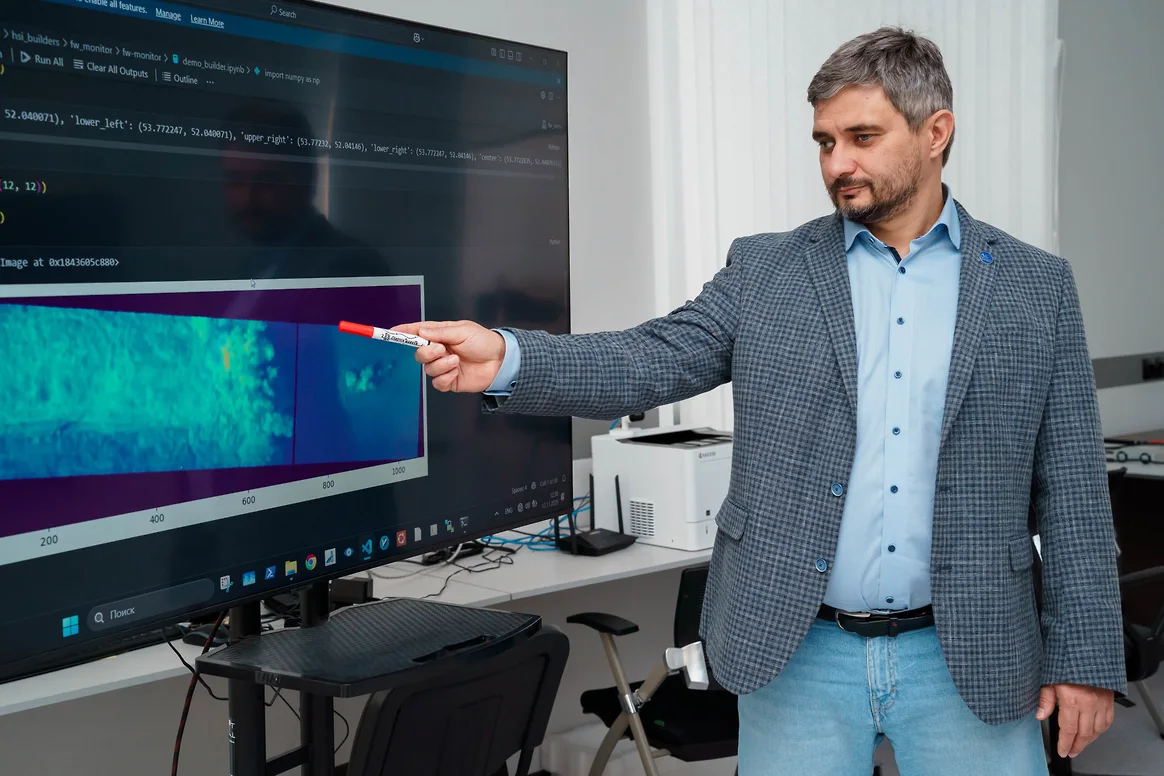
[Photo Caption: Artem Nikonorov, Director of the Institute of Artificial Intelligence at Samara University]
The research at Samara University is being conducted in close collaboration with Sber’s Quantum Technologies Center. This partnership highlights the high level of industry interest in this field and its immense applied potential.
Ultimately, optical neural networks are gradually transitioning from fundamental research into the applied realm. They are poised to become the foundation for a new generation of computing architectures—especially in domains where speed, energy efficiency, compactness, and the ability to operate under high loads and limited resources are absolutely critical.
Source: Kommersant
