

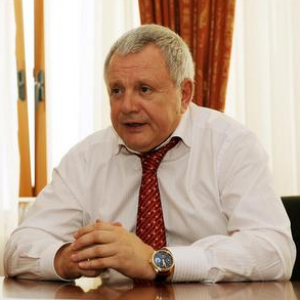
Konstantin Titov entered the golden fund of graduates of Samara University, first of all, as a politician and statesman, who for a long time determined the development of our region. His governorship coincided with the difficult years of the formation of the new Russia and largely influenced the current day of the province. Today, Konstantin Alexeevich is a member of the Public Chamber of the Samara Region. In an interview to Volga News, he spoke about the role that KuAI played in his life and how the university forms the elite of the region and the country now.
— Why did you choose the Kuibyshev Aviation Institute (now Samara University)?
— I wanted to get an engineering technical education. Then, in 1962, airplanes, of course, were the supreme example of engineering creativity for me. At that time I lived in Kuibyshev alone, without my parents, and the closed university, which was KuAI, attracted me with its high level of responsibility and discipline.
— Was it easy to study? What was especially difficult?
— The first two years were very difficult. The requirements were strict, discipline, I had to combine work and study – then there was such a focus on “connection of school with life.” And I must say, there was point in it. I worked half a day at an aircraft factory, by the way, thanks to this I became a second-class milling machine operator, and then went to study.
The lecturers were strict with us. At school mathematics was my favorite subject, but at the university at first it became my least favorite one. Higher mathematics did not come easy to me, but eventually the lecturers helped. Thanks to Gennady Prokhorovich Fedorchenko, who taught mathematics competently and interestingly, I fell in love with it again. In his classes I always sat at the first desk. I liked the way he taught probability theory. As a result, I passed all the subjects he taught us with excellent marks.
Our dean, Alexander Petrovich Napadov, instilled in us a love for the profession. He had a reputation as a “student” dean. He treated us like a father and always was willing to help.
It was a time of great achievements, high goals, and broad plans. Industry was developing rapidly, new directions were being mastered.
The lecturer Arkady Semenovich Kazarin could explain a very difficult subject – strength of materials which, as a rule, is not passed the first time, in such a way that all the students of the course unconditionally passed it on the first try.
I joined a scientific club at the machine parts department and, thanks to the lecturers who worked there, Natalia Kalinina and Oleg Parakhonsky, I designed and manufactured a press.
— Was the school strong in non-core subjects?
— Yes, that was what made the university very special. I was fascinated by social sciences, and I am very grateful to the head of the department, Professor Moisei Solomonovich Kvetny. He instilled in me a love for philosophy, I even wrote papers under his supervision, and some of them were published.
Such a serious approach to study led to good results: while studying in graduate school, I practically did not prepare for philosophy and always passed exams with excellent marks.
Moreover, not only the educational process, which was captivating with a variety of subjects, depth of presentation of material, was well organized at KuAI, but also ordinary student life. This included public works, sports, and electives, including one in oratory skills.
The rector sent all the enrolled students to Vladimir Oshchepkov’s choir for an audition. He was convinced that every engineer needs Tchaikovsky, because aesthetic education is directly related to intellectual development. Despite the fact that I was involved in sports and had no time, I had to go too. Having listened to me, Oshchepkov concluded that it would be better for me not to sing, but we have been friends ever since.
— As a rule, long-term friendships are born during student years…
— This was the case with me. During my student years, I became friends with Valery Nikolaev, who headed the industrial group LLC Samara-Aviagaz for a long time, with Viktor Soyfer, the current president of Samara University, Mikhail Alexandrov, Anatoly Belov and many others.
For instance, I met Soyfer at exams. During the exam review session, the lecturer asked us what a spotlight was. Applicant Soyfer was the only one who plucked up his courage and said: “A point source of light at the focus of a parabolic mirror.”
I memorized this. Then, when I had an exam in physics, the same lecturer Mikhail Pavlovich Menshikh asked me the last question: what is a spotlight? I answered what I had memorized, and eventually I got an excellent mark.
The idea of brotherhood was very strong in the student environment of KuAI. We tried to be the first and the best everywhere. We had a very active Komsomol organization, which carried out serious educational work.
— How did your studies help you in your future life and career?
— I was a good student and in the batch, when 80 people were assigned, I was in the top ten. I recall my studies at the university with gratitude, as a serious school of education and preparation for life. More than once, my interlocutors have noted my academic, encyclopedic knowledge in many subjects. No doubt, I owe my knowledge to the Aviation Institute.
The university was and remains a school of life for me. Why do people often fail to achieve success in life? Because they study for the sake of a grade: they get a desired grade and calm down. But you need to learn to apply this knowledge in practice. The Aviation Institute taught this very profoundly. Today, years later, it maintains its special position. Not just maintains, it strengthens it. This is one of the largest universities in the country, which is rightfully included in the elite of higher education in the Russian Federation. The University has strong traditions of high scientific achievements and quality of education.
— At a certain stage, KuAI formed the elite of the region. Representatives of the University occupied key positions in government structures, in industry, and education. What qualities does the University provide for career advancement?
— The University is still forming the elite of the region in various sectors of the economy. But at the core, of course, is what is associated with the aerospace cluster. Representatives of the University still occupy quite high positions in government structures. For example, the head of Samara Oleg Fursov is a graduate of our aerospace university.
We studied at a closed university, and this seriously influenced the formation of our character. The university had the highest discipline and the highest responsibility: keep your mouth shut, but act and be responsible for the result.
The university had high demands on studying subjects. And the lecturers themselves were an example for us. First of all, this was the Hero of Socialist Labor, academician, rector Viktor Pavlovich Lukachyov. Such people as Dmitry Ilyich Kozlov, Nikolai Dmitrievich Kuznetsov – outstanding designers of rocket and space technology – taught at the University. All this was part of the education.
And the atmosphere was creative. I would even say somewhat liberal. There were both physicists and lyricists. There were discussions when it concerned “lyrics”.
The university gave us a lot – encyclopedic knowledge in many subjects, understanding of the current situation from the point of view of socio-political sciences and development of personal qualities.
— What did the university give you? What qualities, competencies?
— The university gave me broad knowledge on many issues related to mechanical engineering production and the operation of machines and equipment. I graduated from the faculty of Technical Operation of Aircraft and Engines. By the way, Oleg Nikolaevich Sysuev, who was elected mayor of Samara and worked quite successfully in the region until he became Deputy Prime Minister of the Russian Federation, graduated from the same faculty.
The university gave me serious knowledge in the leading economic sectors of the Samara region. This was the foundation, the base. All the rest – socio-political work, everything related to collective actions, from harvesting vegetables to community clean-up days and participation in demonstrations – this was like a superstructure.
I personally value first of all the fact that the university gave me the opportunity to have solid knowledge and be able to apply it in working with people, with teams.
— Is it possible to talk about a certain club-like, elitist nature of the University of those years?
— Quite possible. After all, the competition at that time was from 5 to 12 people per place. It was very difficult to get in. Of course, this alone made the University stand out. The scholarship was also increased, considering the complexity of the education. Many had a vague idea about airplanes and rockets, but we knew how to do it. Many entered the University out of a desire to continue their parents' work.
Our students from the second year were taken to Moscow universities for training in special programs at the Moscow Institute of Physics and Technology, Bauman Moscow State Technical University, and Moscow Aviation Institute.
Graduates of the University worked and continue to work at TsAGI, a research institute that deals with issues of aerohydrodynamics, at the Baikonur Cosmodrome from where rockets are launched. We developed in the University in a variety of ways, and this also added a certain gloss and elitism.
— What do you think is the place of universities in the formation of elites in the country now?
— The first one. Because no matter how much support you have from above or below, if you don't have basic knowledge, if you don't have education, you will never enter the elite. You must have basic knowledge, perspective, you must see several steps ahead. Only then can you be on equal terms with the elite.
— Are universities the centers where a certain foundation is laid – the ability to study, work in a team, acquire the necessary connections?
— Yes, of course. We know that those who studied at Moscow State University are today mainly in the economic block of the Russian government. Those who studied in St. Petersburg are mainly in the legal block, in the government. Graduates of St. Petersburg and Moscow universities, the Higher School of Economics are mainly appointed to federal-level positions. These contacts remain for life. And our graduates work all over the country today.
— Does Russia have its own “Harvards”, “Cambridges”, graduates of which are by definition the elite of the country and the world?
— Of course. These are Moscow University, St. Petersburg University, MIPT, Bauman Moscow State Technical University, St. Petersburg University of Finance and Economics, Plekhanov University of Economics, Higher School of Economics. There are many such universities.
I believe that individual graduates of Samara National Research University are also capable of being in the elite of the Russian leadership. And life has proven this. Vitaly Ivanovich Vorotnikov, for example, a graduate of KuAI, once held the post of Chairman of the Council of Ministers of the RSFSR.
— Do you think that Samara University is now capable of forming the industrial, economic, political elite not only of the region, but also of the country?
— It is. Our University has a serious staff, a good material and technical base, and has established links with the industries in the main areas. Theory, supported by practical skills, provides the highest quality of training specialists.
And after the University became a research one owing to the efforts of the rector's office, the regional administration and the governor, its capabilities expanded even more. Now, they must be used to the fullest extent.
Source: volga.news
