


In 2025, Russia launched the implementation of the national "Space" project. One of its priority tasks is saturating the industry with specialists who possess a full set of modern competencies. Once again, Samara has proven its potential in meeting this challenge. Two student-led satellite creation projects proposed by Samara National Research University won the competition of the Ministry of Science and Higher Education's federal project "Personnel for Space." This initiative, implemented within the framework of the national "Space" project, aims to create a holistic system for training highly qualified specialists for the aerospace industry.
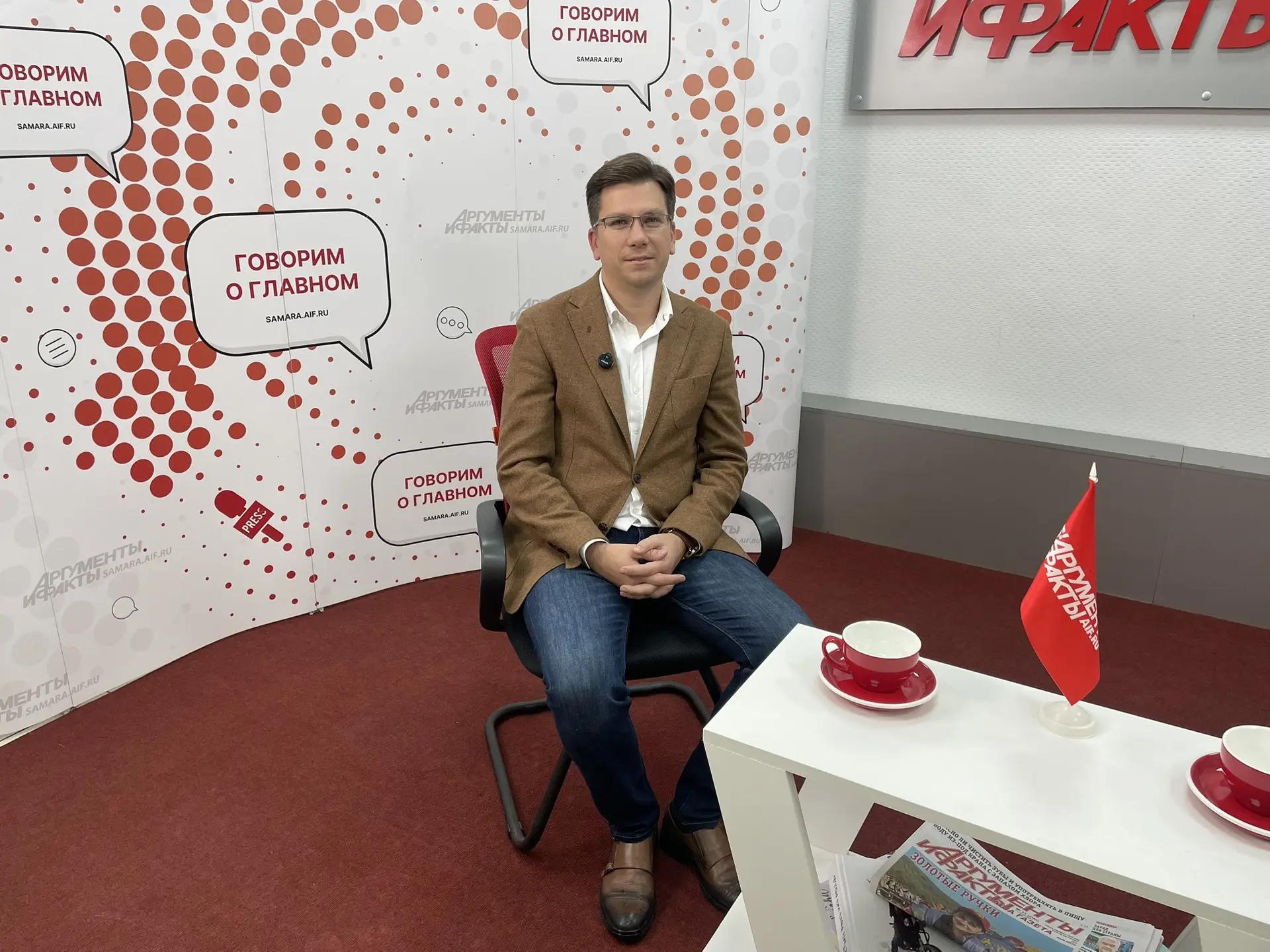
A correspondent for AiF-Samara spoke with Ivan Tkachenko, Director of the Institute of Aircraft and Rocket-Space Engineering at Samara University, about a satellite constellation that can fit in a school backpack and the unique aspects of training modern aerospace engineers.
Technological Renaissance
— Ivan Sergeyevich, is global astronautics changing? How does this affect the training of specialists?
The pace of development in astronautics has always varied. There were periods of less explosive growth. Now, we are experiencing a renaissance; many historians of astronautics draw parallels with the 1960s and 70s: the exploration of deep space, the first people and stations in orbit, and the lunar program. The current period of development is associated with satellite constellations, AI, new materials, and reusable technology. The intensity is very high and resembles the early days of astronautics.
This undoubtedly affects personnel training. Students must master all these innovations. This requires expanding the content of the educational process and packing programs more densely. After all, we must preserve the fundamental base, without which engineering training is impossible.
This requires constant professional development from our faculty. But it also dictates high demands on the students themselves. We can no longer spend two years bringing them up to speed in higher mathematics. There is no time to return to the school curriculum; we must start from a higher baseline.
The Eyes of Russian Space
— Samara University is not the only institution training space specialists. Is there a specific profile that distinguishes it from others?
Earth remote sensing and observation spacecraft. Although we also teach how to build rockets, our "spacecraft engineers" are trained in a special way. We have many students studying in related institutes, for example, the Institute of IT and Cybernetics, where they deal with geoinformatics or the creation of optical instruments. We actively collaborate with them in joint projects, creating a powerful synergistic effect.
We teach both the design and the internal workings of a spacecraft, and the university has experts who work on the payload, processing images from satellites, and so on. Overall, the university covers all stages of the life cycle of an Earth observation spacecraft.
— Are there unique competencies in Samara that no one else can replicate?
Our key industrial partner is the Rocket Space Centre “Progress”. The specifics of its activities are deeply reflected in our academic programs. For decades, the enterprise and the university have walked hand in hand, jointly defining the process of student training and scientific activity.
This has also contributed to the formation of unique scientific schools. I must mention the school of Academician Soifer, related to the processing of satellite images, which has been forming for decades. Today, it is very prominent in the global scientific space and leads in Russia.
— Are there any know-hows that the university is willing to share only with its own students?
Yes, that is true. Today, life is such that, despite the huge volume of open information, this openness extends exactly as far as we allow ourselves to be open. Some professional secrets, know-hows, and technologies, of course, have restricted access.
Less is More
— In the "Personnel for Space" project competition, two applications from Samara University in the field of satellites received funding at once. What kind of spacecraft will these be? What is their practical value and novelty?
The University has been creating student satellites since the late 1980s. At the turn of the 2010s, together with industrial partners, we built satellites and launched them into orbit. We also developed our own platforms. The two winning projects integrate the results accumulated over previous years.
One of the projects is the creation of a satellite based on the university's own platform—SamSat. The spacecraft will be named "SamSat-Korolevets." It is already in the active production phase and will be equipped with an Earth remote sensing camera. Previously, apparatuses of this series did not contain such a payload, so this work is a new challenge for both the team and the platform itself.
The second project, which I lead, is even more student-driven and a bit daring. Using a number of ready-made solutions for a 3U CubeSat (a satellite can consist of several "cubes" or "units" — Ed.), we are creating a mini-constellation of eight so-called "tinysats." Tinysat comes from the English word "tiny." It is a jargon term used to denote picosatellites, i.e., apparatuses weighing up to one kilogram. These tiny satellites will be packed into two containers, and the task of the nanosatellite that houses them is to bring them into orbit, deploy the container, launch them, and then the scientific program of the experiment begins.
In flight, the eight apparatuses will deploy their solar panels and separate into orbit. The uniqueness of this story lies in extreme microminiaturization. Reducing the size of apparatuses is a long-standing trend in astronautics. But in our experiment, the transition from large satellites to small ones is pushed to a certain sharp edge. Several such little satellites can fit in the palm of your hand. Yet, each of them contains an attitude control system, a power supply system, solar panels, an onboard computer, and a payload—in our case, a micro-camera. To what size can we go to create a fully functional satellite? We have set a benchmark for ourselves: it will be an apparatus measuring 5 by 5 by 10 cm.
— And how will it be practically useful?
The main goal of the mission is the demonstration and testing of technologies. To what extent can we miniaturize components to ensure the full functionality of a spacecraft, and for a sufficiently long time? We expect this constellation to exist in orbit for at least six months.
In addition, there are a number of applied and scientific tasks. For example, obtaining images of the Earth. Yes, the cameras are very simple. Yes, the photos will be of low resolution. But we are talking about eight apparatuses that can solve a task collectively. Because they are distributed along the orbit, together they can observe the same object several times during a single pass of the constellation. That is, we can monitor an object in dynamics. For static objects, like a monument in Kuibyshev Square, this is not relevant. It is highly relevant for moving ones or rapidly changing events. For example, these could be natural disasters, catastrophes similar to the recent earthquake, landslides, and floods in Nepal. There, the development of events happens in a matter of minutes. One satellite, having photographed an area of the surface, moves to the next orbit, and it will not return to this point anytime soon. But we have eight apparatuses, and they can sequentially photograph the same point eight times in one revolution around the Earth.
We have another very ambitious task, which we are currently talking about cautiously. We plan to ensure inter-satellite communication between these apparatuses. This task is at the cutting edge of global astronautics; scientists and engineers are only just approaching these technologies. Yes, they are being implemented, but on larger apparatuses, because they require both high energy and serious computing power. For example, laser communication is used, which simply cannot be fitted into a small satellite. We, however, will try to solve this task in extremely small volumes, with very low energy consumption. This is a challenge for the next generation of small spacecraft development.
— What is the role of students in the projects?
The leadership of both projects, including the positions of chief designer, has been given to students. The role of senior mentors is administration and guidance. Our task is not to hinder the impulse of student thought, because they generate all the ideas themselves. All the "hardware" implementation is also the labor of the students.
— How do you see tomorrow's space scientist and engineer? How will they differ from the pioneers?
I know for sure what they will not differ in: intellectual curiosity. This is something without which space technology would not have been mastered, and has never been mastered, throughout its entire 65-year existence.
Dossier
Ivan Sergeyevich Tkachenko. Vice-Rector of Samara University, Director of the Institute of Aerospace Engineering. Scientific interests include small spacecraft, electric propulsion engines, systems analysis, orbital inspection, multi-satellite space systems, and the robotization of spacecraft production. In 2026, he was awarded the degree of Doctor of Technical Sciences.
Photo: Elena Mironenko
Source: samara.aif.ru
