

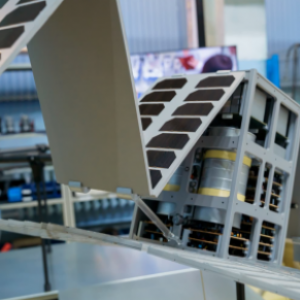
Russia’s first radar-equipped CubeSat, "AIST-ST," is proving to be a versatile tool for environmental protection, offering the capability to rapidly detect oil slicks and water pollution. Speaking to TASS, Maxim Ivanushkin, Head of the Cyber-Physical Factory of Small Spacecraft at Samara University, highlighted the satellite's broad ecological and economic potential.
"Radar sensing is highly effective for the environmental assessment of water bodies. Radar imagery can capture subtle differences in wave patterns on the surface of clean versus polluted water. This opens up significant opportunities for the rapid detection of oil films and other water contaminants," Ivanushkin explained.
Beyond environmental monitoring, the satellite's radar imagery holds immense strategic value for Arctic exploration and maritime navigation. Ivanushkin noted that the small spacecraft can monitor ice movement from orbit, thereby ensuring the safety and efficiency of icebreaker operations along critical routes such as the Northern Sea Route.
Furthermore, the satellite's all-weather, day-and-night imaging capabilities—penetrating through heavy rain, dense fog, and even vegetation canopy—make it an invaluable asset for agriculture, forestry, and civil mapping. These advanced observational capabilities can significantly enhance resource management, crop monitoring, and territorial planning.
About the "AIST-ST" Mission:
The "AIST-ST" is the world’s smallest radar Earth remote sensing satellite. It was developed in Russia with the support of the Space-Pi scientific and educational project by the Innovation Promotion Foundation, as well as through the "Priority 2030" Strategic Academic Leadership Program and the "Advanced Engineering Schools" program.
Weighing approximately 30 kilograms, the spacecraft utilizes centimeter-wavelength radio waves in the X-band (8 to 12 GHz) to conduct all-weather monitoring, capable of capturing high-quality imagery through dense cloud cover. Beyond its technological achievements, the AIST-ST mission serves a vital educational purpose, engaging schoolchildren and university students in hands-on scientific, technical, and research activities in the field of space technologies.
The AIST-ST spacecraft was launched on December 28, 2025, aboard a Soyuz-2.1b carrier rocket from the Vostochny Cosmodrome.
Source: TASS News Agency
