


Young scientists and postgraduate students from Samara University have won a competitive grant to develop student satellites under the federal project "Personnel for Space" (Kadry dlya Kosmosa). Samara University has been awarded a subsidy of approximately 53 million rubles to implement two distinct projects, both of which are scheduled for completion by the end of this year.
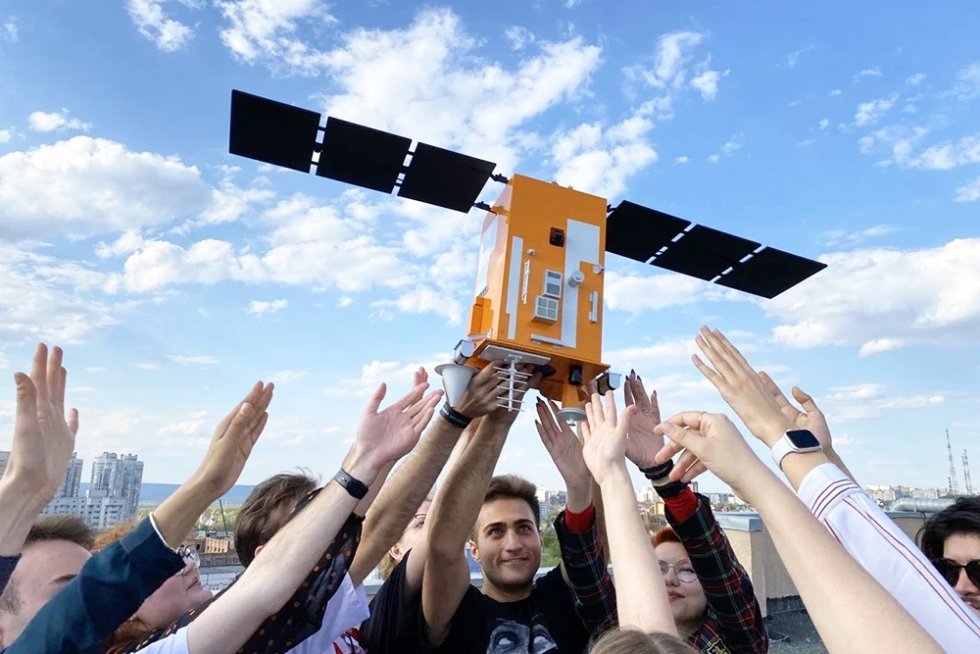
The first project involves the creation of the "SamSat-Korolevets" nanosatellite, built upon the university’s universal "SamSat" platform. University students are actively involved in the development team. The spacecraft's payload will enable the monitoring of the Northern Sea Route and the Arctic zone of Russia. Notably, the system will feature onboard capabilities for preliminary image analysis and the automatic filtering of low-quality data.
The second project focuses on the development of a constellation comprising eight ultra-small spacecraft (picosatellites). The research team will focus on refining attitude control and stabilization systems. Special attention is being given to inter-satellite communication, for which a multi-level network model with data encryption has been developed. The team aims to manage the relative motion of the satellites within the constellation without traditional propulsion systems, relying instead on differential aerodynamic drag in the upper layers of the atmosphere.
"The aerospace industry is transitioning from single spacecraft to constellations and orbital platforms," noted Vladimir Bogatyrev, Rector of Samara University. "Artificial intelligence, miniaturization, new materials, and quantum communications are replacing classical engineering solutions. To train personnel capable of meeting the challenges of our time, we need entirely new approaches to education."
This year, under the "Personnel for Space" initiative within the national "Space" project, 40 student and school satellites will be developed nationwide. Additionally, 40 educational programs will be launched, providing specialized training to 20,000 students, faculty members, and research organization employees.
Source: Rossiyskaya Gazeta (rg.ru)
