

As part of the business program of the 13th International Forum for Technological Development "Technoprom-2026," a panel session titled "Investing in Personnel for Space" took place. Participants discussed approaches to building a modern ecosystem for training engineering personnel in the space industry, shared the initial results of the "Personnel for Space" federal project as a key mechanism for its formation, and explored prospects for further scaling and deepening the most effective practices of collaboration between the state, universities, research institutes, and industry.
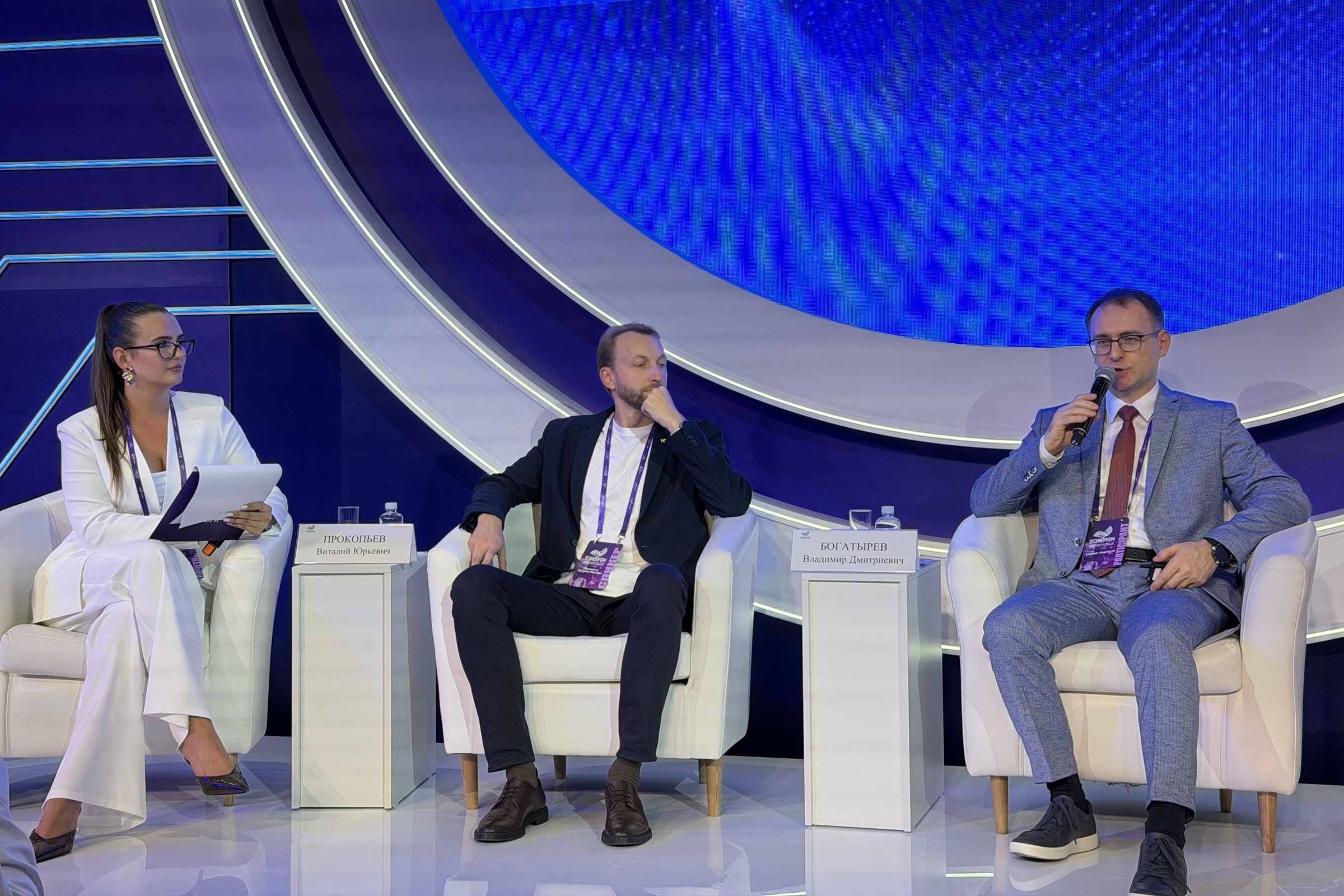
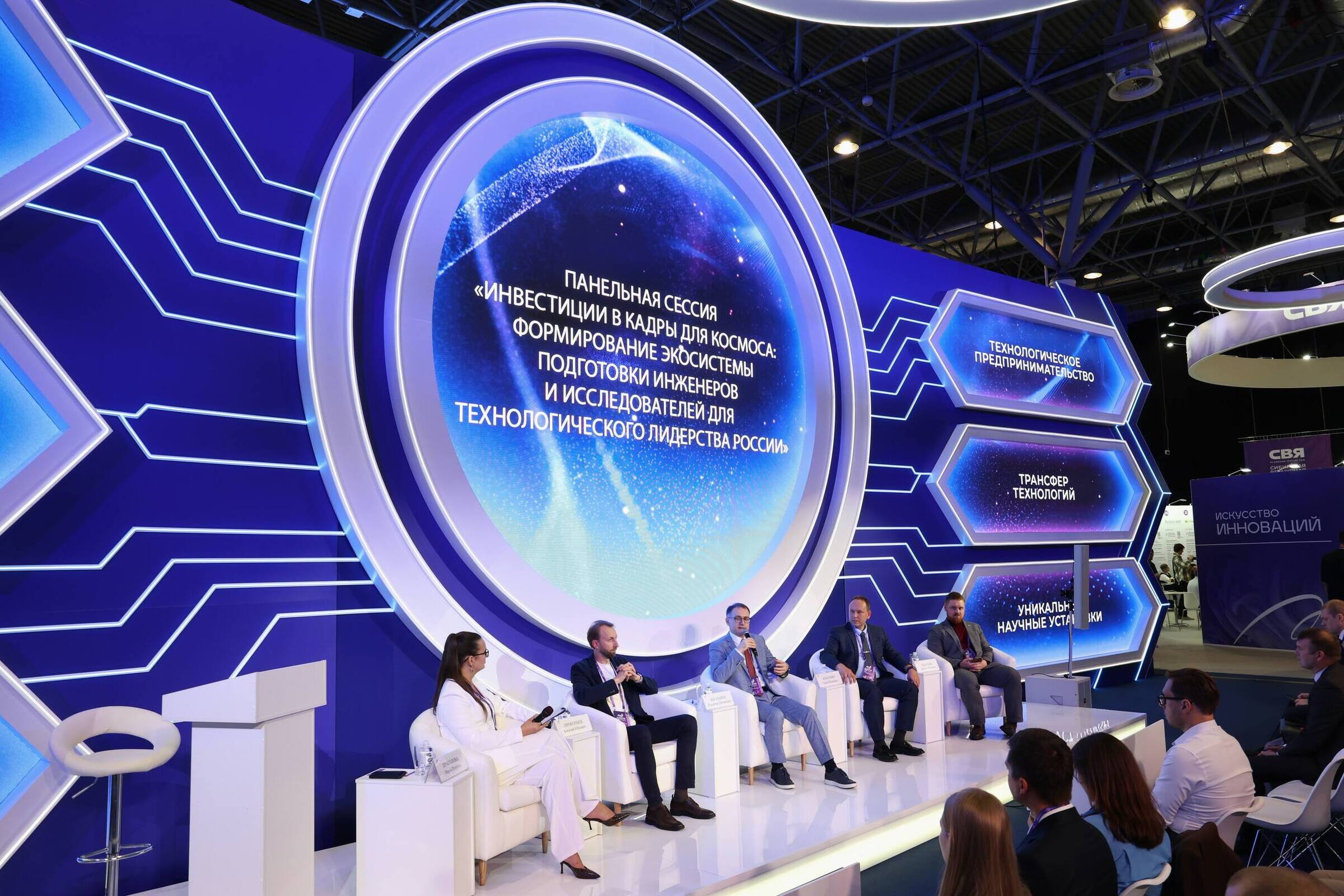
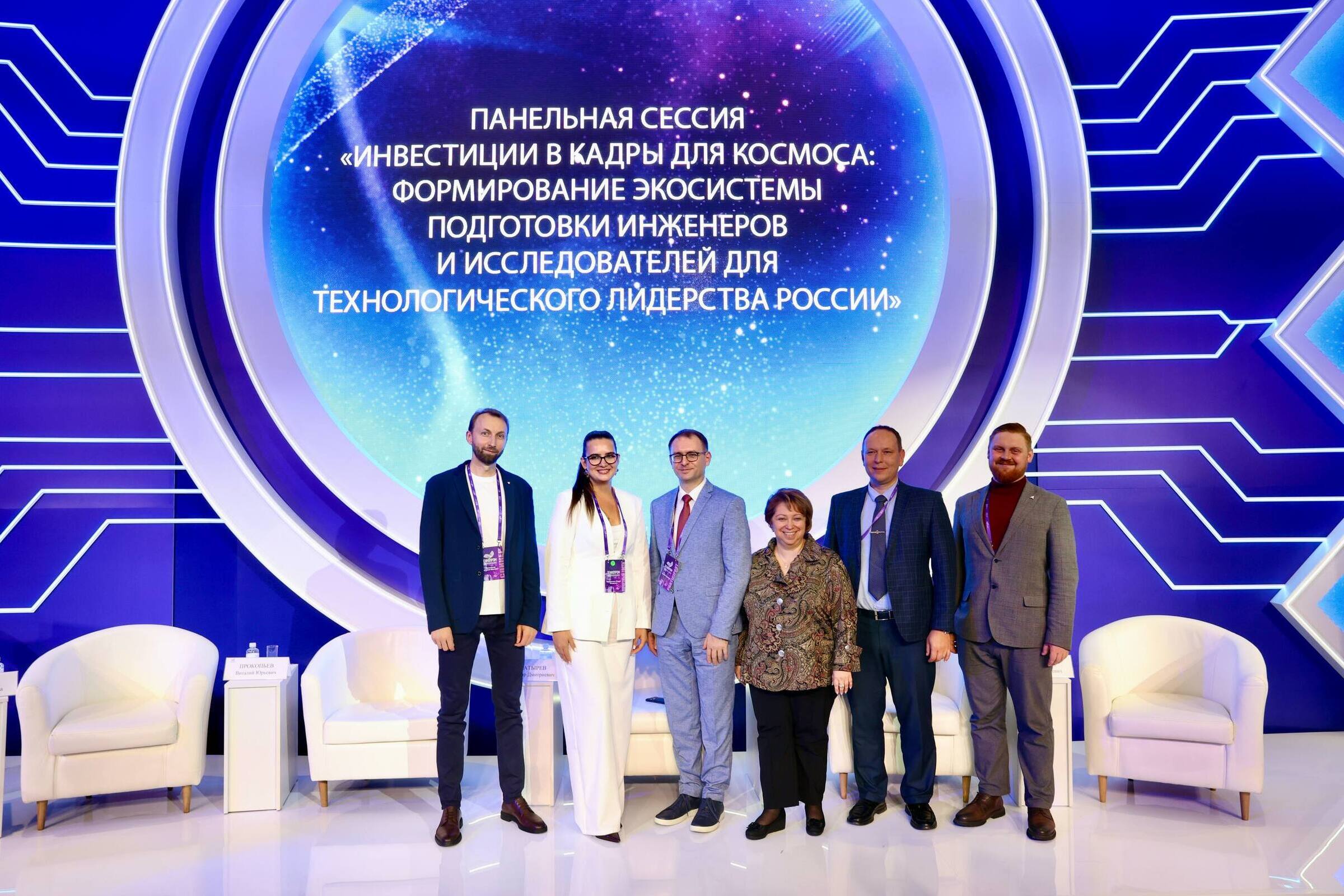
The discussion was moderated by Maria Prasolova, First Deputy Director of the Center for the Implementation of the "Personnel for Space" Federal Project of the Ministry of Science and Higher Education of the Russian Federation.
Developing competencies for training personnel for the rocket and space industry is among the state's top priorities in the context of national technological sovereignty. Modern engineering developments and new scientific discoveries are impossible without the fresh ideas of young engineers and scientists.
The "Personnel for Space" federal project of the Ministry of Science and Higher Education of the Russian Federation implements the President of Russia's directive to launch a systematic program for creating and launching student and school small spacecraft. Its strategic goal is to ensure the involvement of competent young specialists in the Russian space industry who can contribute to solving tasks of national significance.
Opening the discussion, session moderator Maria Prasolova noted:
"The importance and relevance of working with engineering personnel and attracting them to the rocket and space industry is evident in all aspects of state policy in this sphere. That is why the 'Personnel for Space' federal project became the first launched federal project of the national technological leadership project 'Development of Space Activities of the Russian Federation for the Period up to 2030 and with a Perspective up to 2036.' By that time, it is crucial for us to prepare a new generation of engineers who can solve real technological challenges and know how to work in a team right from their university days."
The scale of the task is also defined by global dynamics: today, there are over 11,000 spacecraft in Earth's orbit, with the USA and China each planning to launch at least 20,000 satellites by around 2030. The Russian orbital constellation currently comprises approximately 300 spacecraft.
By the end of 2026, 40 student and school small spacecraft with various payloads will be developed under the federal project for subsequent launch into Earth's orbit. By 2036, more than 400 student, school, and scientific-educational spacecraft will be developed and launched based at universities and scientific organizations.
Samara University’s Leading Role
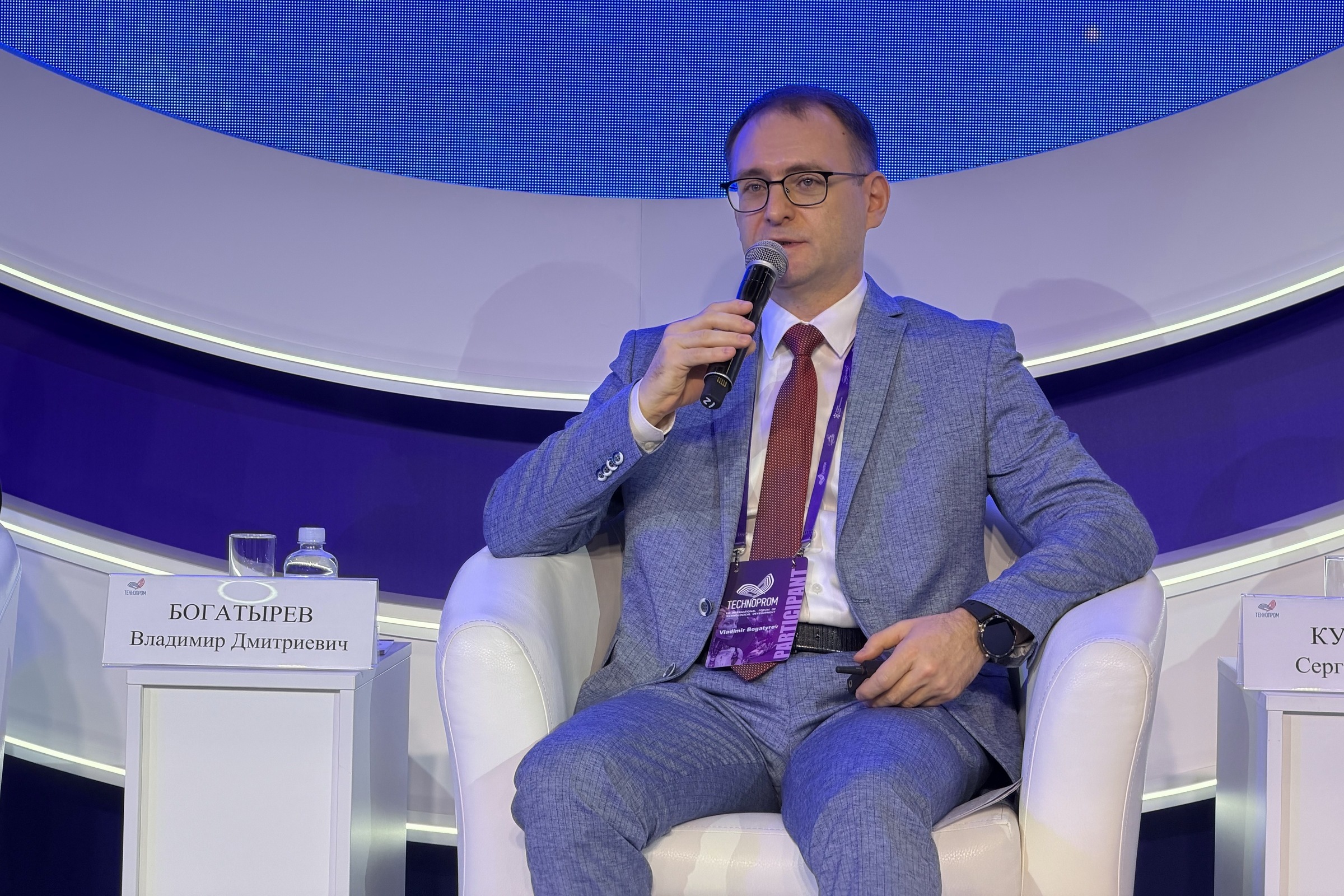
One of the key speakers at the session was Vladimir Bogatyrev, Rector of Samara National Research University, who presented the university's extensive experience in training engineering personnel through the creation of student satellites.
Addressing the discussion participants, Vladimir Bogatyrev highlighted the radical shift in requirements for training engineers for the space industry.
"Today, the requirements for training space engineers are changing radically: the industry is transitioning from single spacecraft to satellite constellations and orbital platforms, while artificial intelligence, miniaturization, new materials, and quantum communications are replacing classical engineering solutions. To train personnel capable of meeting the challenges of our time, new approaches to education are needed," the Rector emphasized.
At Samara University, this approach has been realized through phased, project-based learning using real student satellites. According to Vladimir Bogatyrev, students go through the full cycle: from atmospheric CanSats in their early undergraduate years to orbital CubeSats and the testing of critical technologies—such as autonomy, maneuvering, high-speed radio communication, and radiation resistance—during their master's and postgraduate studies.
"Students go through the complete cycle: they participate in the design, assembly, testing, and orbital management of small spacecraft. We already have our own satellite constellation, and the launch of a new spacecraft, 'SamSat-Orion,' is scheduled for this year," he stated.
The Rector noted that the "Personnel for Space" federal project has become a catalyst for the development of space education at the university.
"It allowed us to create a youth laboratory for ultra-small spacecraft, we are modernizing our data reception center, developing the 'SamSat-Korolevets' nanosatellite and a constellation of eight 2tU ultra-small spacecraft, and launching three advanced training programs for 710 people each," Vladimir Bogatyrev shared.
Among the expected outcomes, he highlighted the attraction of top talent to the industry and the creation of an ecosystem for training personnel to ensure Russia's technological leadership in the aerospace sector. Furthermore, Vladimir Bogatyrev proposed supporting more complex space missions within the framework of the federal project, transitioning to a two-year project implementation cycle, and actively involving international students in these initiatives.
A Unified National Effort
Yulia Gorbunova, Rector of Skoltech and Academician of the Russian Academy of Sciences, also emphasized the importance of the federal project for the development of university science:
"Skoltech participates in the 'Personnel for Space' federal project with great enthusiasm. Our student teams are creating small spacecraft: Skoltech LUMOS is designed to study the radiation effects on various types of electronic memory using photonic technologies, and Skoltech-F is aimed at improving the reliability of electronic memory in space conditions. Thanks to the federal project and the support of the Ministry of Science and Higher Education, there are more examples in Russia of how university science is engaged in solving real-world engineering tasks of a global scale. At Skoltech, such tasks are a priority: researchers are focused on bringing their own developments to real market applications, thereby contributing to the country's technological leadership."
Other notable participants also spoke during the session:
- Vitaly Prokopyev, Head of the Aerospace Research Department at Novosibirsk State University, discussed the specifics of participating in the federal project and working with qualified industry customers.
- Daniil Zolotnik, Deputy General Director for Education at Geoscan Moscow, shared experience in public-private partnerships for training aerospace personnel.
- Sergey Kuksenko, Vice-Rector for Research and Innovation at Tomsk State University of Control Systems and Radioelectronics, spoke about the experience of creating a continuous engineering training pipeline—from a student satellite to onboard equipment.
In conclusion, Maria Prasolova announced that, jointly with the Roscosmos State Corporation, the regulations for the preparation and launch of student and school small spacecraft into Earth's orbit are being finalized. The document will define the procedure and deadlines for submitting applications and technical documentation, verifying the readiness of the spacecraft and their adaptation to launch vehicles, reserving launch opportunities, concluding contracts, and confirming the fact of the launch. This mechanism will apply not only to spacecraft created under the federal project but will be available for any student and school small spacecraft.
Competitive selections for participation in the federal project in 2027 will be announced shortly. Educational and scientific organizations, regardless of their departmental affiliation or form of ownership, are eligible to participate.
For Reference:
The 13th International Forum for Technological Development "Technoprom-2026" is taking place in Novosibirsk from August 26 to 28 with the support of the Government of the Russian Federation.
The main theme of the forum this year is "Russian Science as the Foundation of Technological Leadership." The business program includes ten tracks, among which a separate track, "Personnel for National Technological Leadership Projects," was dedicated to forming a continuous personnel model—from early career guidance to employment at high-tech enterprises. Delegations from 75 regions of Russia and 39 countries are participating in Technoprom-2026.
