

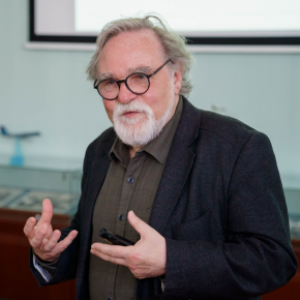
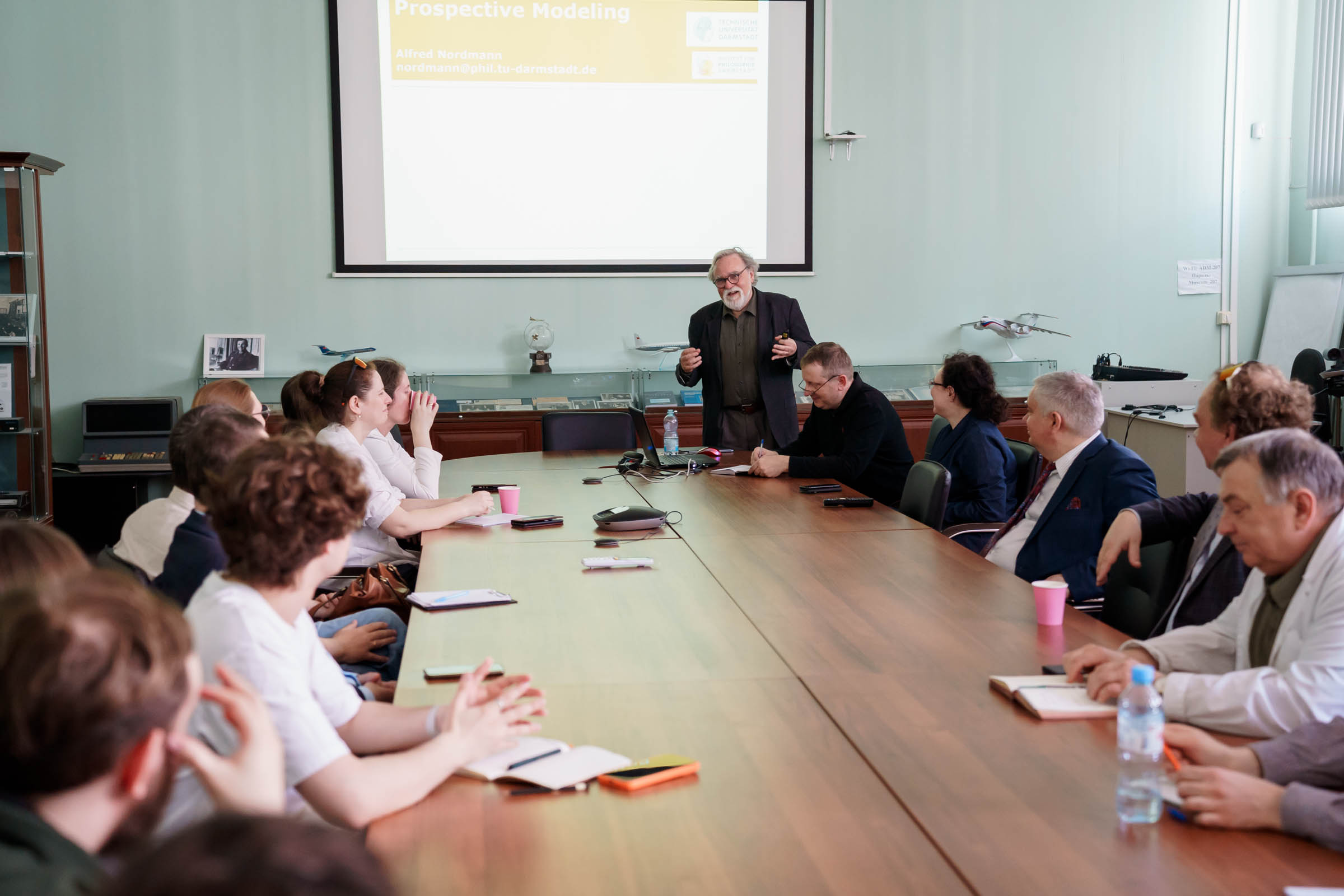
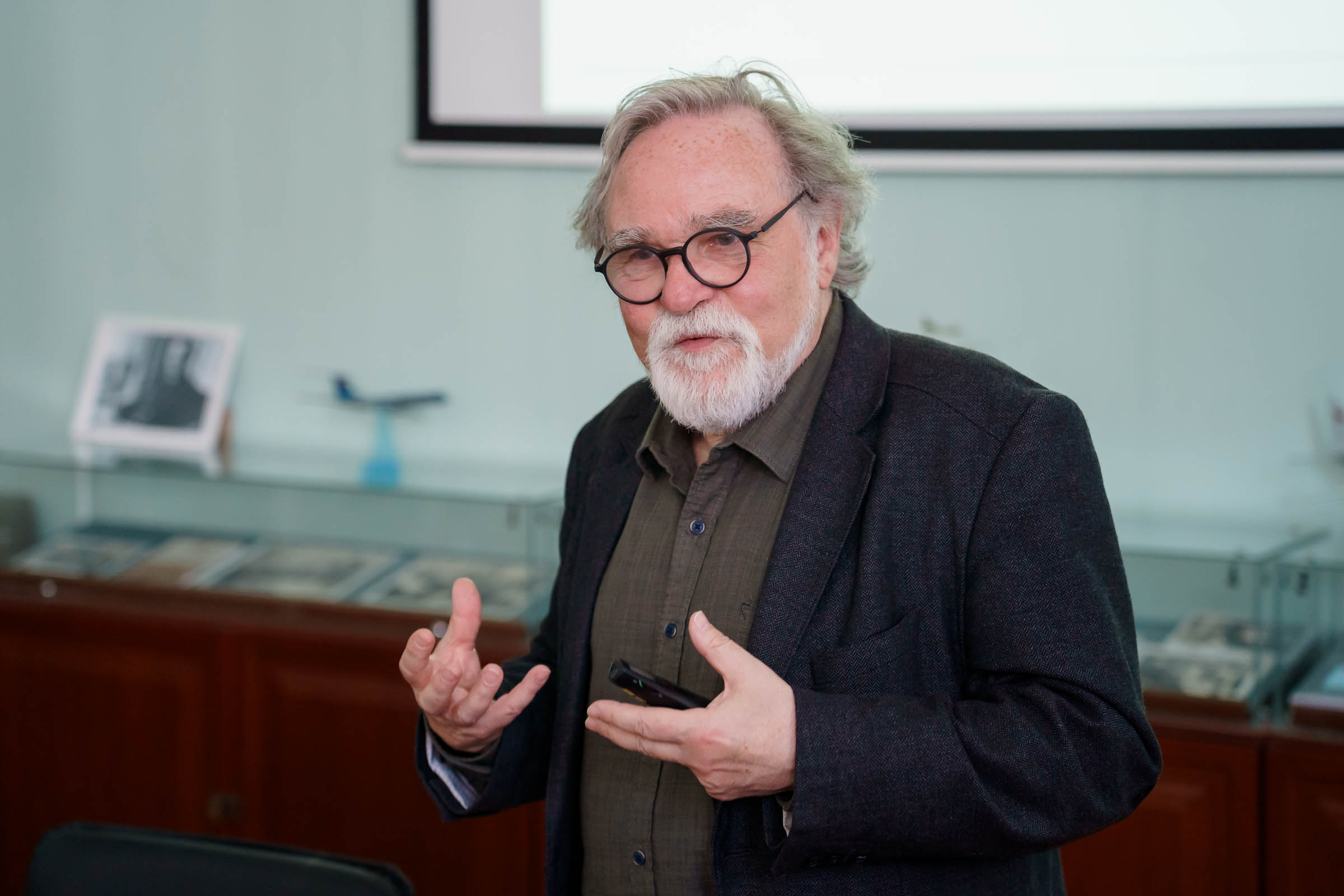
Samara National Research University recently hosted a thought-provoking seminar titled “Prospective Modeling,” led by Professor Alfred Nordmann of Peter the Great St. Petersburg Polytechnic University. Moderated by Alexander Nesterov, Director of the Institute of Social Sciences and Humanities and Head of the Department of Philosophy, the event gathered over twenty participants—including faculty and postgraduates from the humanities, as well as scientists and engineers specializing in exact sciences, informatics, and cybernetics.
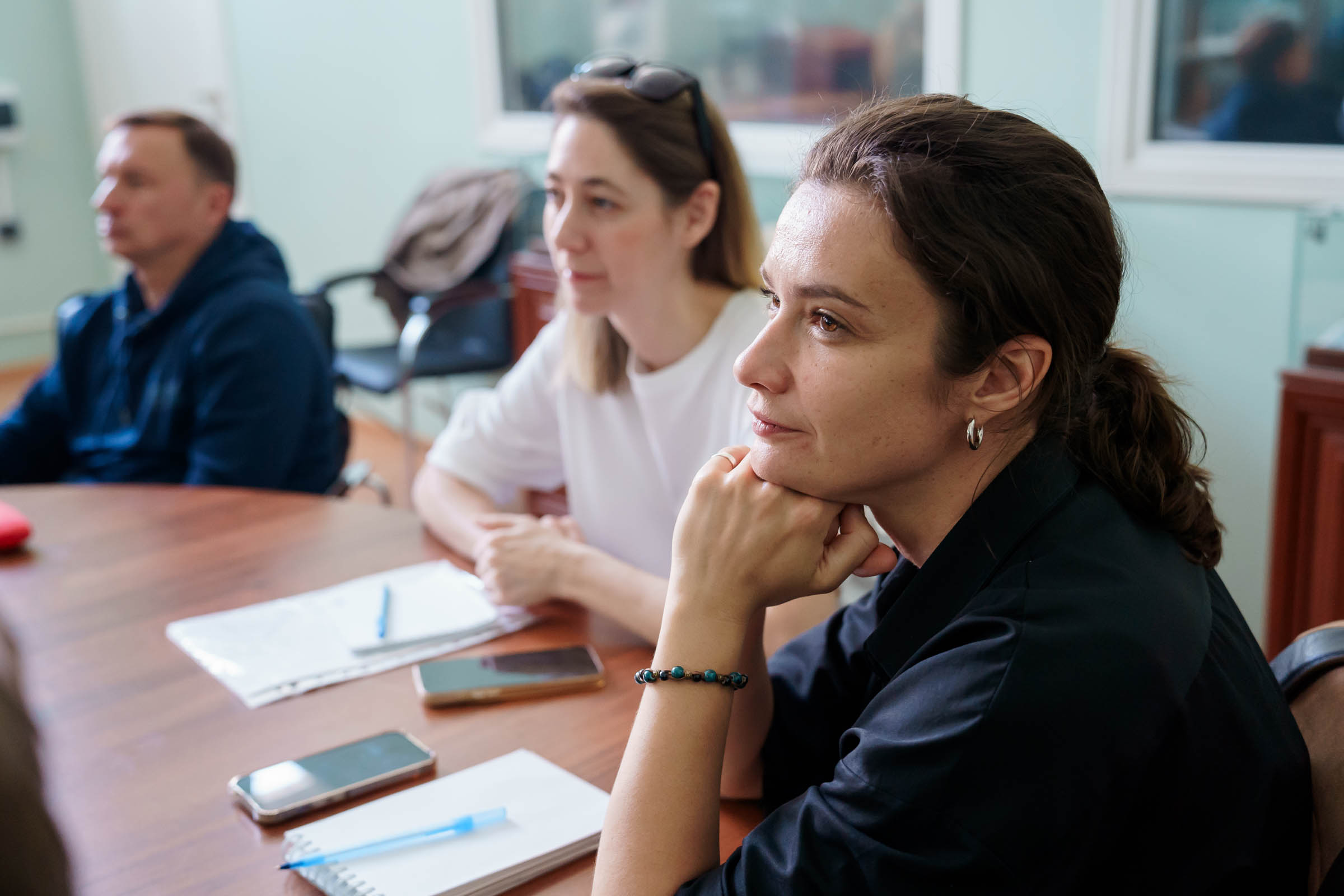
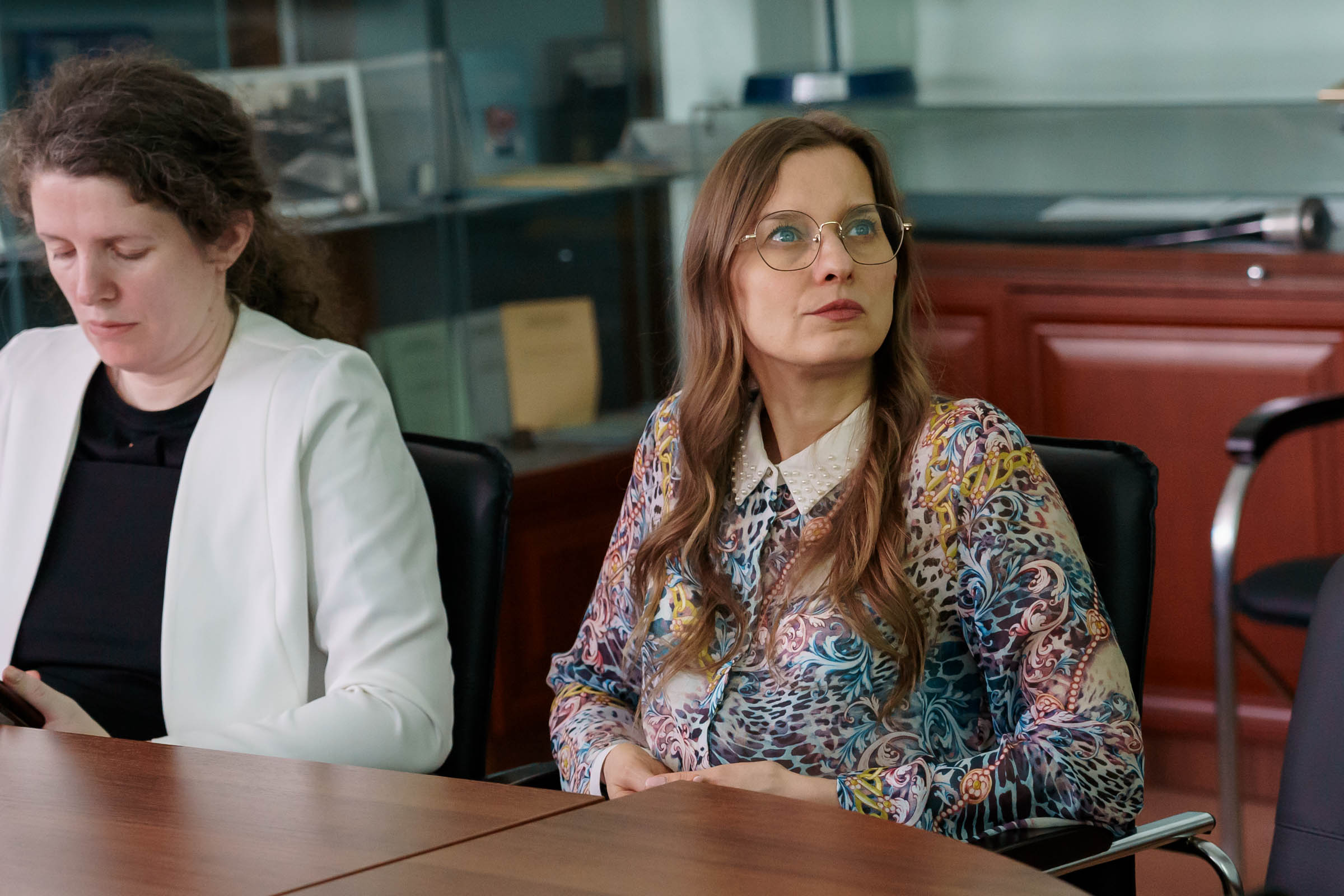
Anna Rozenzweig, First Vice-Rector for Research at Samara University, welcomed Professor Nordmann as a truly unique figure in contemporary science and expressed hope for deeper collaboration between the two universities:
“I sincerely hope that the discussion sparked today will lay the groundwork for new collaborative directions—that fresh ideas and joint research topics will emerge from this meeting, opening new horizons at the intersection of humanities and technical knowledge.”
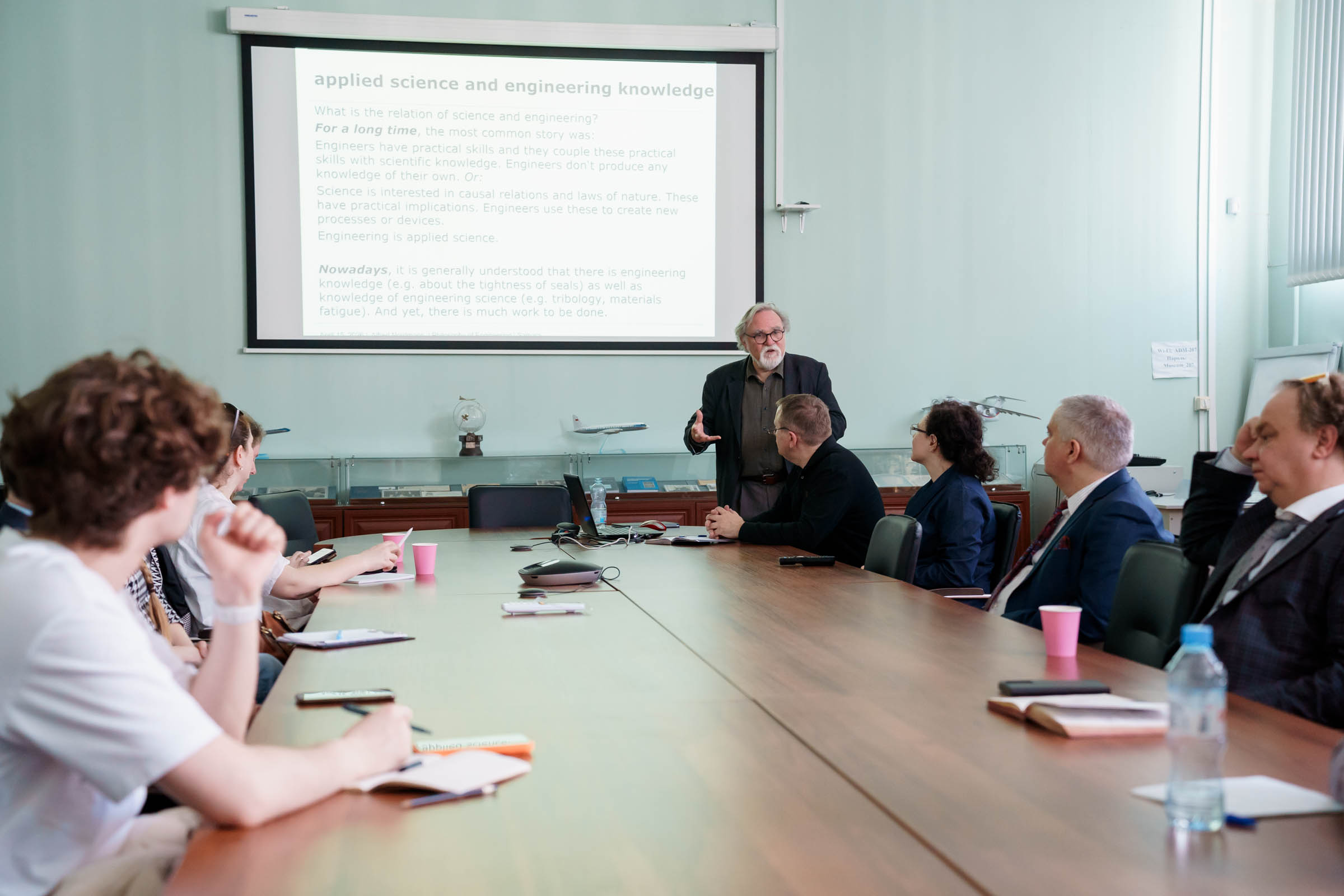
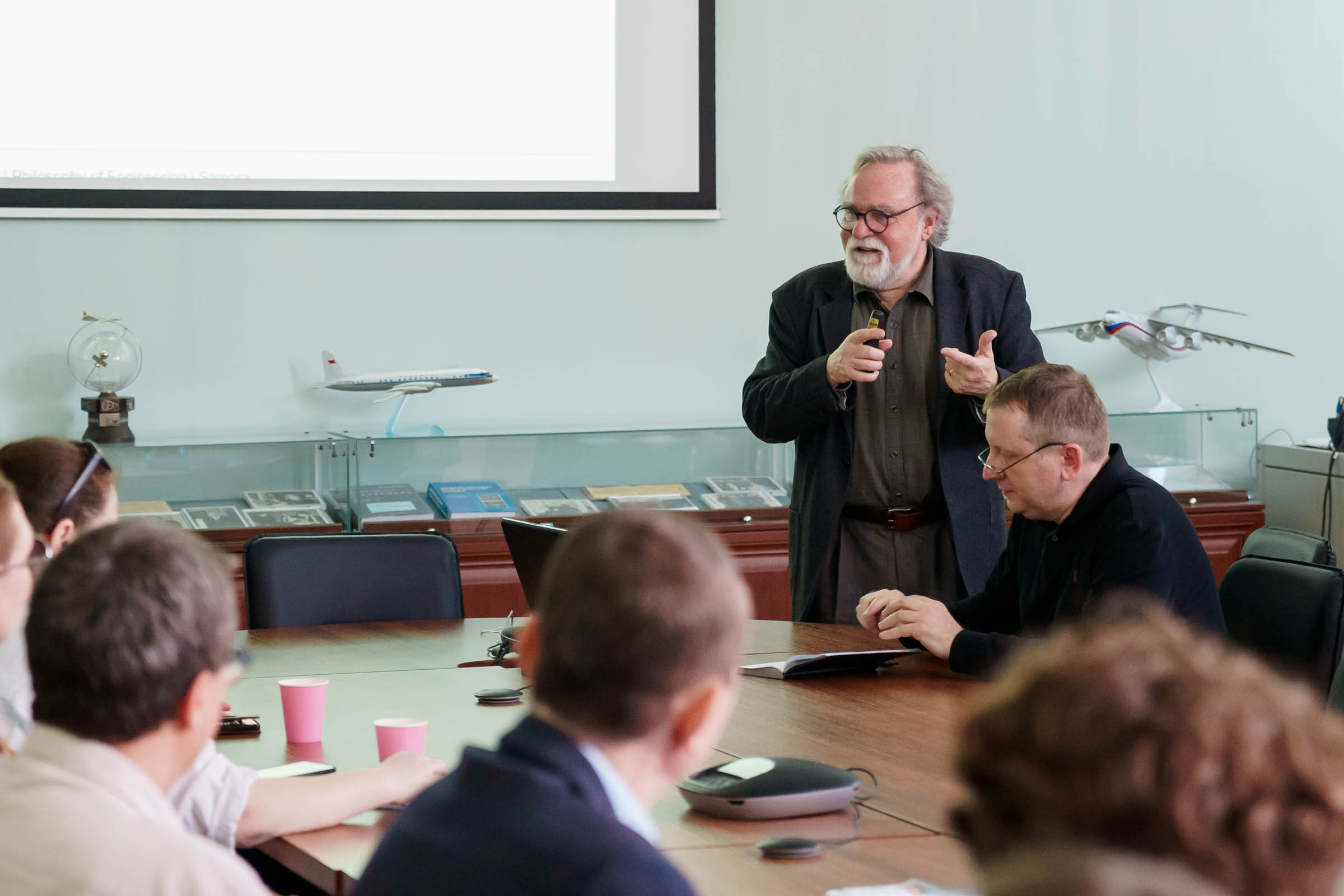
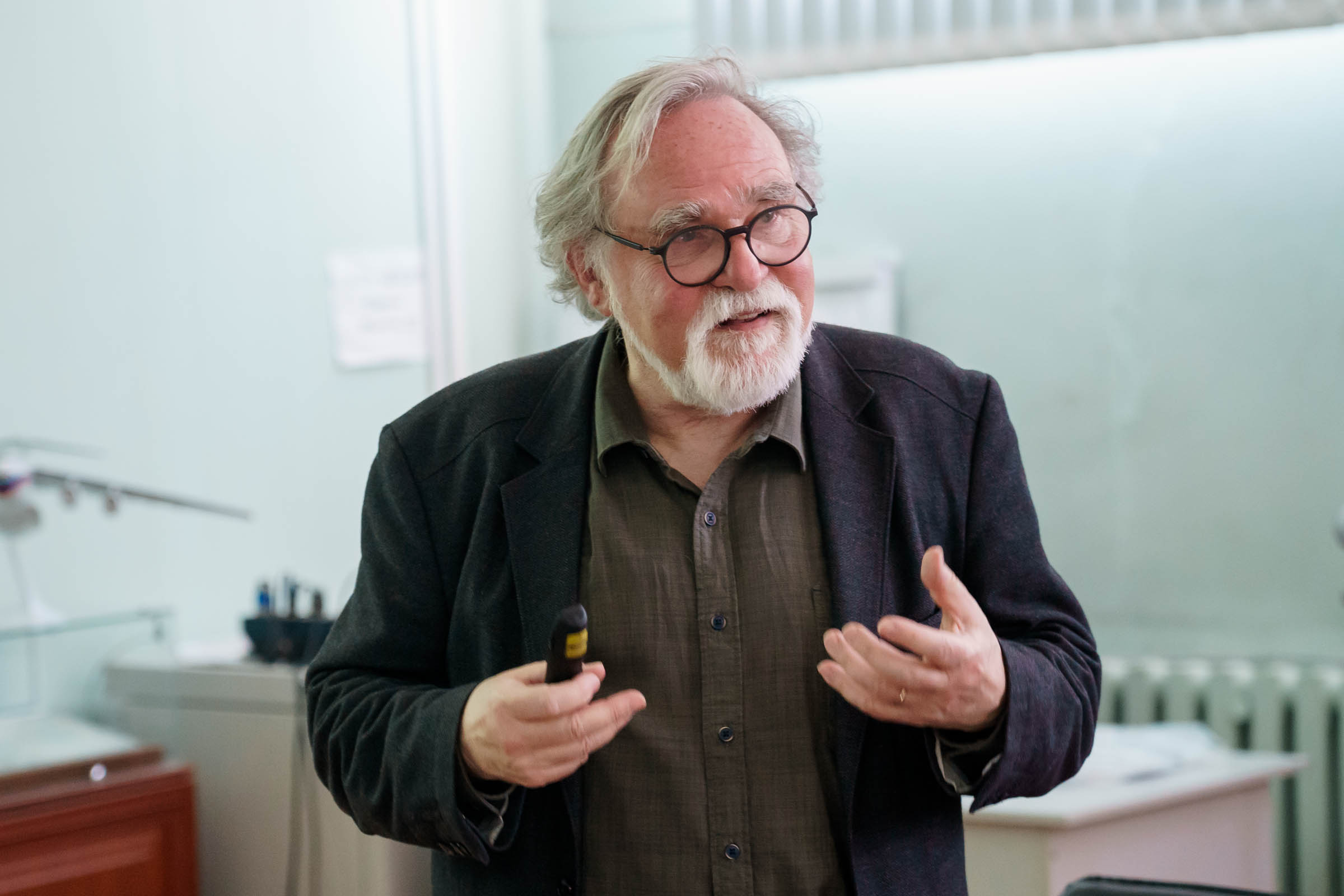
Professor Nordmann’s lecture centered on the dynamic interplay between philosophy and engineering. He opened with a fundamental question: What can philosophy learn from engineering?—and posed a provocative challenge: Does engineering generate new knowledge, or does it merely apply existing scientific insights to build devices, systems, and technologies?
He then delved into the foundational principles of modeling, examining how researchers across disciplines simulate processes, phenomena, events, and artifacts. A key distinction he explored was between retrospective modeling—reconstructing past events—and prospective modeling—anticipating future developments or designing systems that do not yet exist.
Addressing model typologies, Nordmann raised what he called a “provocative” philosophical question: Can models exist that are not representations?
His presentation was complemented by Daria Bylyeva, Associate Professor at the Higher School of Public Sciences at St. Petersburg Polytechnic University, who joined him in Hanoi and spoke about forecasting using neural network technologies.
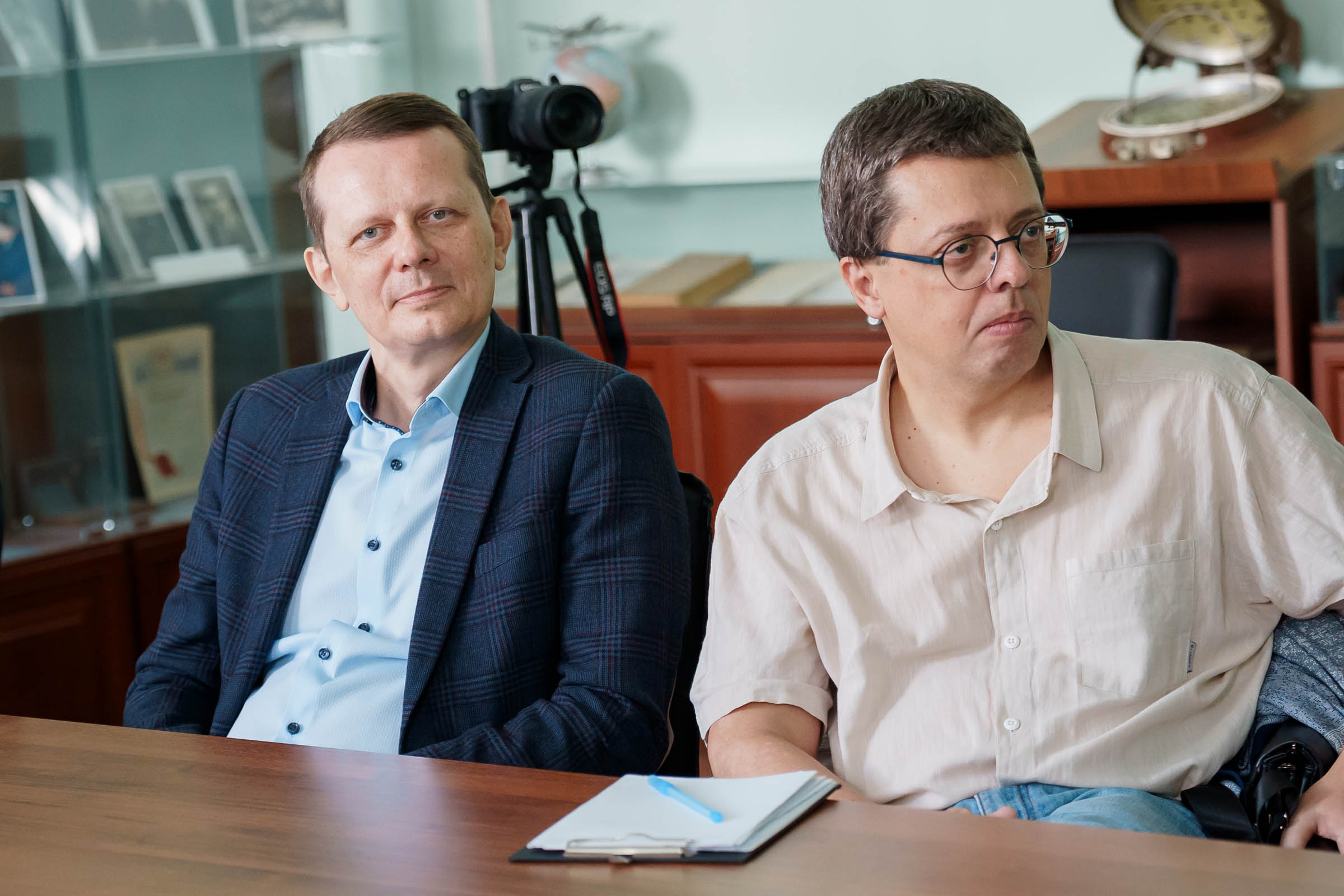
The ensuing discussion was rich and interdisciplinary. Participants posed original, boundary-pushing questions:
- Anton Doroshin, Head of the Department of Theoretical Mechanics at Samara University, asked how prospective modeling relates to fictional virtual worlds in video games or even invented languages like Tolkien’s Elvish—artificial constructs with internal logic but no empirical referent.
- Andrey Agafonov, Head of the Department of General Psychology, inquired whether it’s possible to model consciousness—not as a cognitive architecture, but as subjective, first-person experience (what philosophers call noumenal consciousness)—and if so, what form such a model might take.
- Dmitry Golovashkin, Head of the Department of Applied Mathematics, drew a parallel with TRIZ—the Soviet-era Theory of Inventive Problem Solving developed by Genrich Altshuller—and suggested its relevance to Nordmann’s framework:
“In my view, Altshuller’s work, particularly TRIZ, could offer valuable insights for advancing your theory.”
Moderator Alexander Nesterov then posed what he described as an “unanswerable” question: Can prospective models exist without a modeling subject? Concluding the session, he proposed organizing a roundtable or dedicated panel on prospective modeling at next year’s annual conference “The Human in the Information Society,” hosted by Samara University’s Institute of Social Sciences and Humanities. By then, a Russian translation of Professor Nordmann’s article on the topic will be published, inviting broader scholarly engagement.
“By expanding our circle of contributors,” Nesterov suggested, “we could present a series of talks exploring how different fields—from theoretical mechanics and propulsion engineering to quantum physics—employ distinct types of models. This would form an excellent foundation for publication, either in our Russian-language journal Semiotic Studies or in the English-language Technology and Language, published by St. Petersburg Polytechnic University.”
The audience warmly endorsed the proposal. Professors Nordmann and Bylyeva, who serve as editors of Technology and Language, also voiced strong support for the initiative.
Photos by Olesya Orina
